
Asthma Smart Management Awareness (ASMA) Program
Need Help Managing Asthma?
The ASMA Program offers simple, easy-to-understand resources help you recognize symptoms, and take control of your health. If you are interested in asthma education or collaborating with our team, contact us! (442) 265-7489
Quicklinks

The Asthma Smart Management Awareness (ASMA) Program
The Asthma Smart Management Awareness (ASMA) Program is a community-based initiative made possible through the AB 617 Program and California Climate Investments funds. The program is a collaboration with Imperial County Air Pollution Control District and implemented by the Imperial County Public Health Department to improve asthma prevention, education, and management across Imperial County. The program focuses on helping children, families, schools, and healthcare providers better understand asthma, reduce exposure to triggers, and support healthy, active lives.
ASMA uses an evidence-based approach, including models such as CHAMPS (Community Healthcare for Asthma Management and Prevention of Symptoms), to deliver culturally and linguistically appropriate education tailored to the needs of Imperial County communities.
Our Key Efforts
Asthma Education & Awareness
Utilizing evidence-based and easy-to-understand, bilingual educational materials and launching community-wide awareness campaigns to help families recognize asthma triggers, use medications correctly, and manage symptoms effectively.
Community Partnerships
Collaborating with hospitals, clinics, schools, and community organizations to create a coordinated asthma care network and improve access to resources and support services.
Healthcare Collaboration
Working with local healthcare providers to strengthen asthma care practices, improve patient education, and establish referral systems that connect patients to community-based support.
Asthma-Friendly Schools
Partnering with schools to assess current practices, improve indoor air quality, and promote student-led awareness through initiatives like an Asthma Student Ambassador Program.
Environmental & Policy Strategies
Supporting efforts that reduce asthma triggers in homes, schools, and communities, including improving air quality and aligning with smoke-free housing initiatives.
Workforce Development
Training staff and community health workers to deliver high-quality, culturally responsive asthma education and outreach throughout the county.
Our mission is to raise awareness of asthma care and improve asthma self-management by empowering families, schools, healthcare providers, and community partners with culturally appropriate resources and education. Through evidence-based education, collaborative partnerships, and environmental health strategies, the Asthma Smart Management Awareness (ASMA) Program supports individuals and families in achieving healthier, asthma-safe lives.
Our vision is a community where every individual and family—regardless of background, culture, or ability—can breathe freely and live healthy, active lives. We strive to eliminate asthma-related disparities by fostering equitable access to education, resources, and care, creating environments that support wellness, and empowering future leaders to advocate for cleaner air and healthier schools.
According to data from the CDC, asthma affects some groups more than others, including adults under 65, people with lower incomes, and racially diverse communities. These groups often experience higher asthma rates, more emergency room visits, and more serious health problems. To reduce these gaps, our community can benefit from more education, better access to care, and policies that help reduce exposure to asthma triggers in homes and neighborhoods (National Center for Environmental Health, n.d.).
Asthma Data Analysis in Imperial County
Asthma is slightly more common in Imperial County than in California as a whole. As shown in Figure 1, about 15.9% of people in the county have been diagnosed with asthma, compared to 15.1% statewide. The data also show that adults in Imperial County experience asthma more often (18.1%) than children (10.4%). This highlights the importance of supporting adults and families in our community who are living with asthma.
Asthma Prevalence in Imperial County and California by Age Group and County Comparison
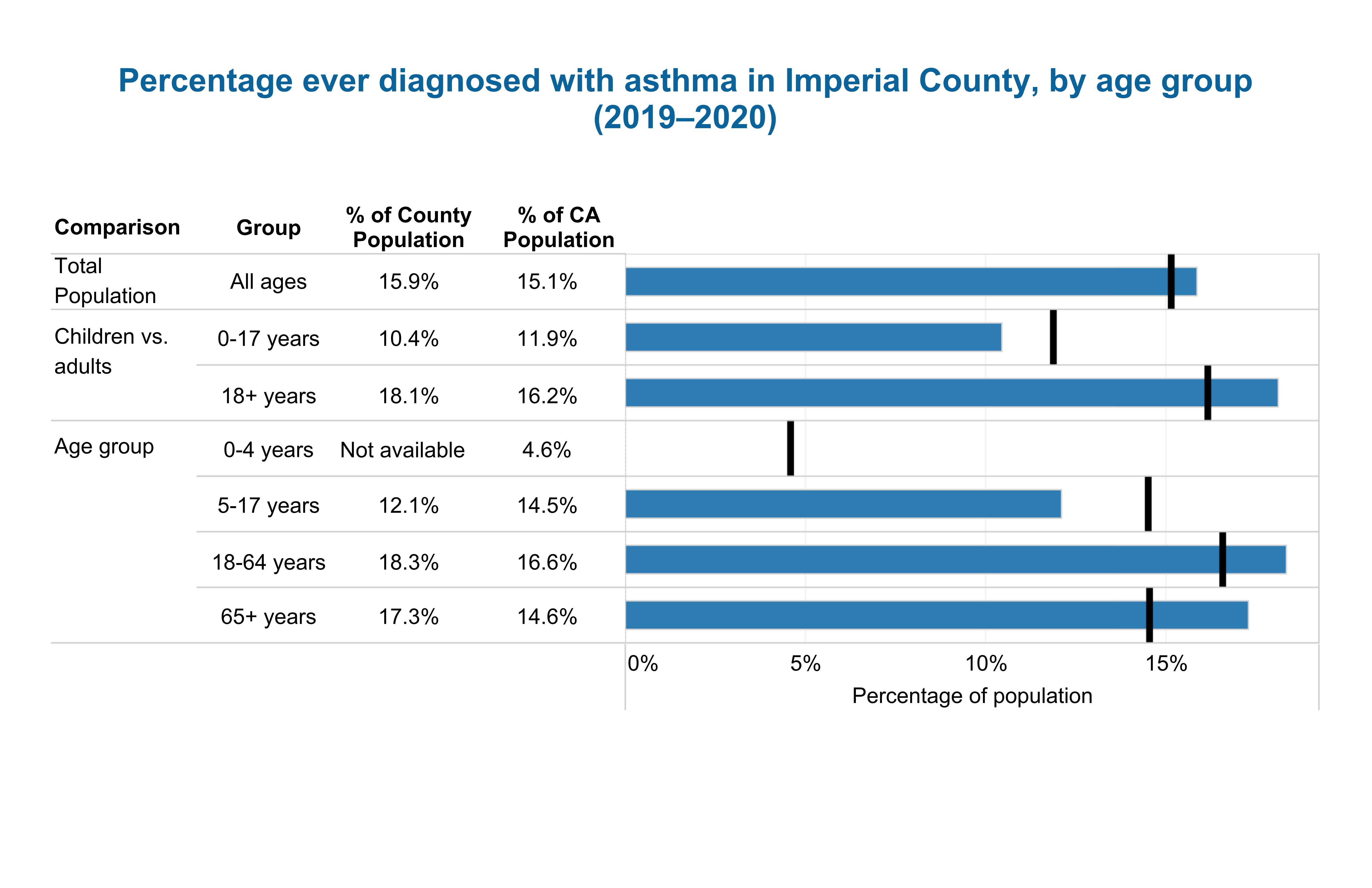
The data shows that asthma is slightly more common in Imperial County than in the rest of California. It also shows that adults in our county have asthma more often than children. These findings remind us how important it is to continue offering education, support, and resources to help families manage asthma and reduce triggers.
What is Asthma?
Asthma is a long-term lung condition that affects the lungs' airways. Learn more about these alterations and triggers that could result in symptoms that lead to an asthma attack by watching this two-minute illustrated film (American Lung Association, 2020).
Source: (American Lung Association, 2020)
What You Need to Know About Asthma
Asthma affects breathing and it can cause symptoms such as:
Wheezing
Coughing
Shortness of breath
Chest tightness
Asthma attacks can be triggered by environmental factors such as dust, pollen, smoke, air pollution, or respiratory infections.
Asthma triggers are factors that can make breathing harder and cause symptoms to worsen, potentially leading to asthma attacks or hospital visits. Learning to recognize and avoid your triggers is an important step in managing asthma and preventing flare-ups (American Lung Association, 2026).
Health Conditions
Respiratory infections (cold, flu, sinus infections)
Pregnancy hormones
Some foods and medications can trigger asthma symptoms
Food allergies
Anti-inflammatory medications like Ibuprofen
Smoke
Tobacco smoke
Smoke from fireplaces, campfires, and leaf burning
Weather, Pollen, and Air Pollution
Cold, windy, or stormy weather
Sudden or extreme temperature changes
High humidity
Pollen from weeds, trees, and grass
Air pollution, smog, vehicle exhaust, and fumes
Animals
Animal dander
Cats, dogs, hamsters, birds or mice
Pests
Cockroaches
Rodents, such as mice and rats
Dust mites
Mold
Physical Activity
Walking or going up stairs
Vigorous or high-intensity exercise
Emotions
Anger and fear
Feeling stressed or anxious
Strong Odors and Fragrances
Cleaning products
Scented candles, hairspray, air refresheners
Ongoing shortness of breath, even when resting or lying down
An asthma episode that does not improve with a rescue inhaler that normally works
Lips or fingernails changing to a bluish color (or gray in darker skin tones)
Difficulty breathing to the point of not being able to speak a full sentence without stopping
A sensation of tightness or pressure in the chest
Feeling restless, confused, or unable to focus
Using extra effort to breathe, such as raising the shoulders, tightening neck or stomach muscles, or needing to sit or stand upright to breathe more comfortably
Source: American College of Emergency Physicians
Breathe Easier—Check Your Air Quality
Current Air Quality Index (AQI)
Air quality conditions can change throughout the day due to weather,
wildfire smoke, dust, and other environmental factors. Check the
current AQI for your location before spending time outdoors.
The Air Quality Index helps you understand when outdoor activities may need to be adjusted to protect your health.
Community Outreach and Education
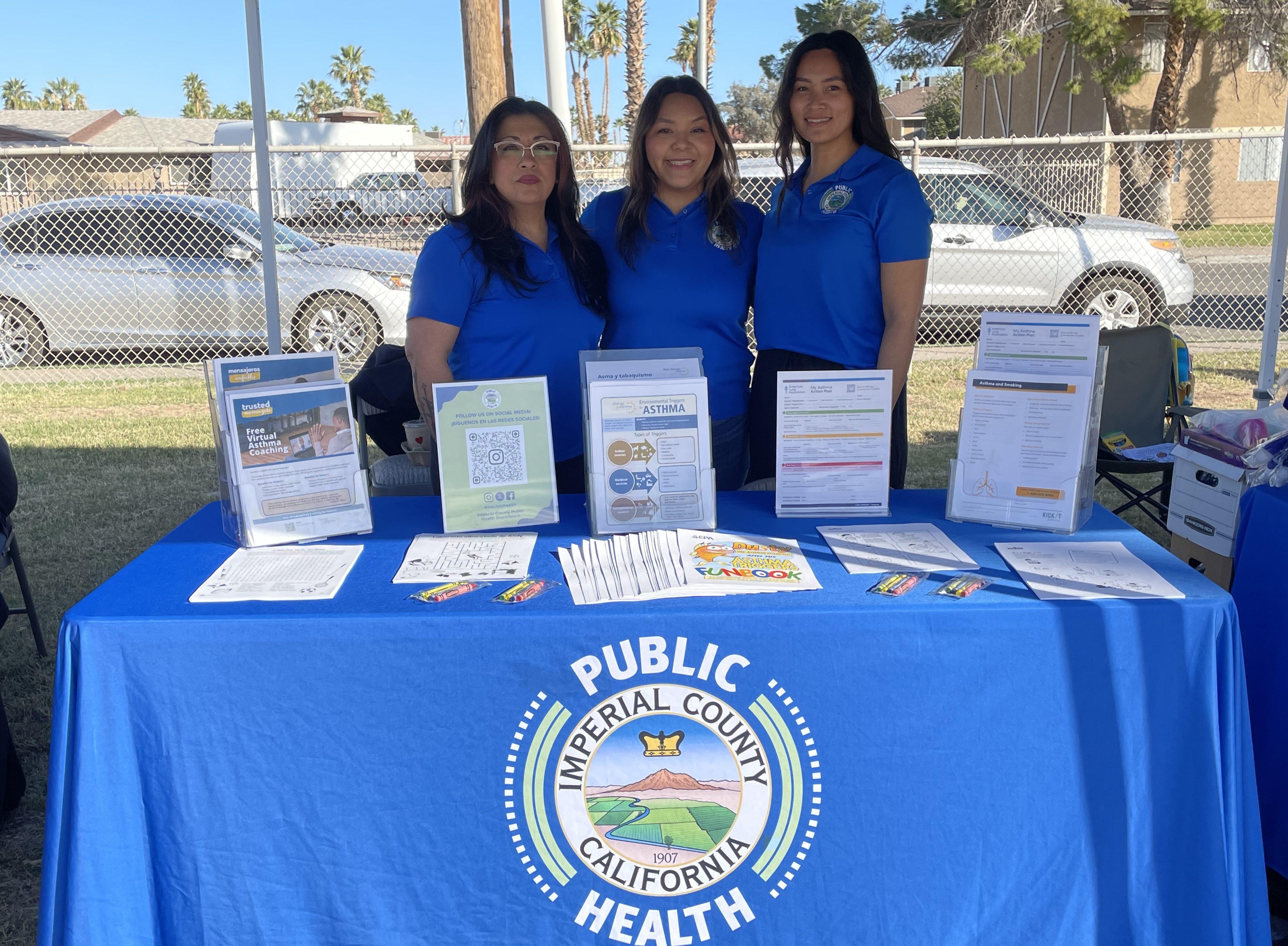
Color Run
ASMA program staff attended El Centro Elementary School District Color Run in El Centro, CA.

What do you know about Asthma?
Asthma Smart Management Awareness Program presents information about Asthma prevention and management.
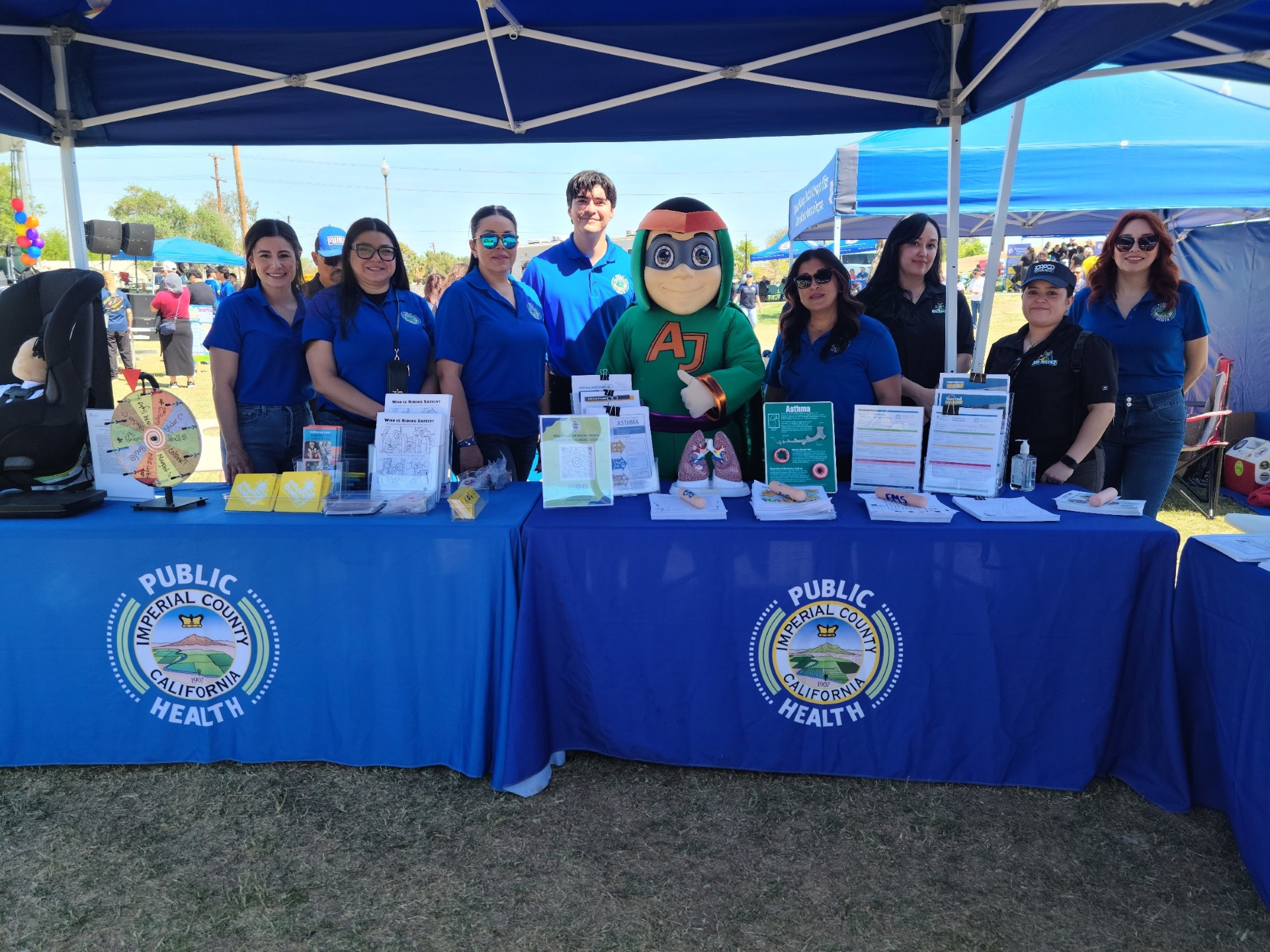
Children's Fair
ASMA staff member educates community about Asthma prevention and management at 2026 Children’s Fair at Bucklin Park in El Centro, CA.
Resources
Asthma and COPD Medicines: Asthma and COPD Medicines.pdf
My Asthma Action Plan For Home and School: Asthma Action Plan.pdf
Talking with Healthcare Provider: LMBB: Tips for Talking With Your Health Care Provider About Asthma Fact Sheet | NHLBI, NIH
Tips to Control Your Child’s Asthma: Tips to Control Your Child's Asthma Infographic | AAN Store
What Are Your Asthma Triggers? What Are Your Asthma Triggers?
American College of Emergency Physicians . Asthma — Know When to Go to the ER. www.emergencyphysicians.org/article/know-when-to-go/asthma.
American Lung Association. (2020, October 23). What Is Asthma? | American Lung Association. Lung.org; American Lung Association. https://www.lung.org/lung-health-diseases/lung-disease-lookup/asthma/learn-about-asthma/what-is-asthma
American Lung Association . (2026, January 20). Reduce Asthma Triggers. Lung.org. https://www.lung.org/lung-health-diseases/lung-disease-lookup/asthma/managing-asthma/reduce-asthma-triggers
California Department of Public Health. (2022, May 26). California Breathing County Asthma Data Tool. Cdph.ca.gov. https://www.cdph.ca.gov/Programs/CCDPHP/DEODC/EHIB/CPE/Pages/CaliforniaBreathingCountyAsthmaProfiles.aspx
National Center for Environmental Health. (n.d.). Asthma Surveillance in the United States, 2001-2021. CDC. https://www.cdc.gov/asthma/Asthma-Prevalence-US-2023-508.pdf